


 This is an area to discuss anything that has to do with Arts & Cultural items, such as Photography, Paintings, History, Movies, Television, Music, Fashion, etc.
Pics of my 6 inch

Thread Starter
Administrator

Joined: Oct 2002
Posts: 13,943
Likes: 0
From: ɯooɹpǝq ɹnoʎ
Vehicle: ǝdnoɔ sısǝuǝƃ
 Pics of my 6 inch
Courtesy of my dad. He carried it when he worked for LASD 25-30 years ago.
S&W .357 6" Stainless, shown next to my wife's .22
Floyd - I was told you could advise me on ammunition. I'm a gun noob - point me in the right direction for cheap target rounds and some for protection.
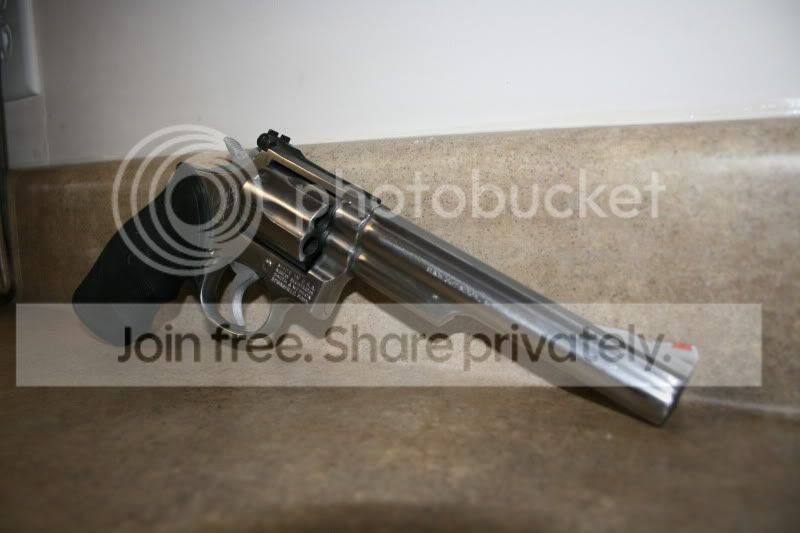


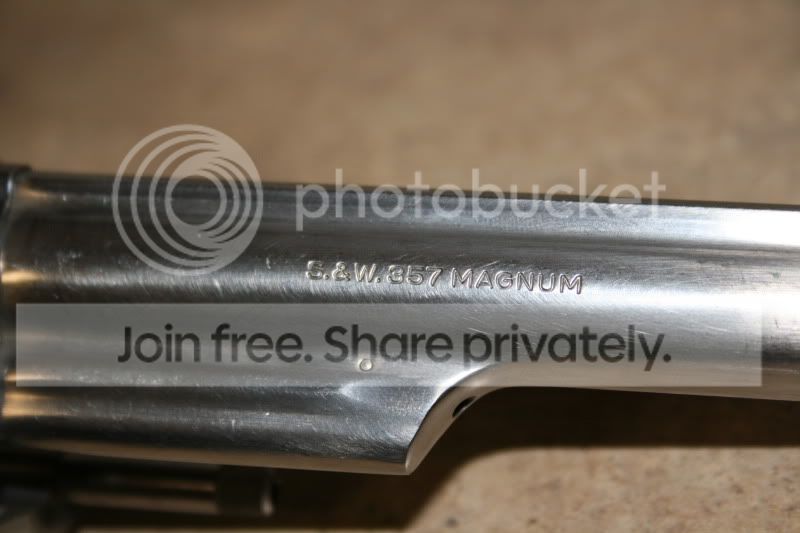
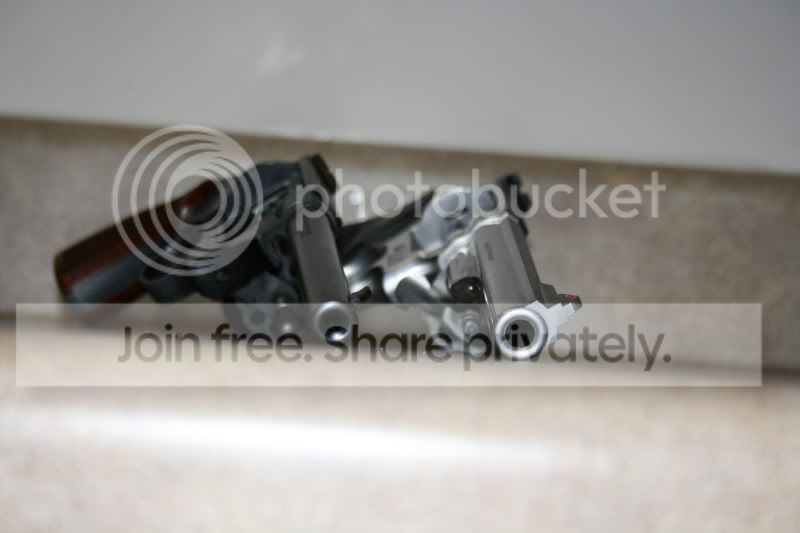
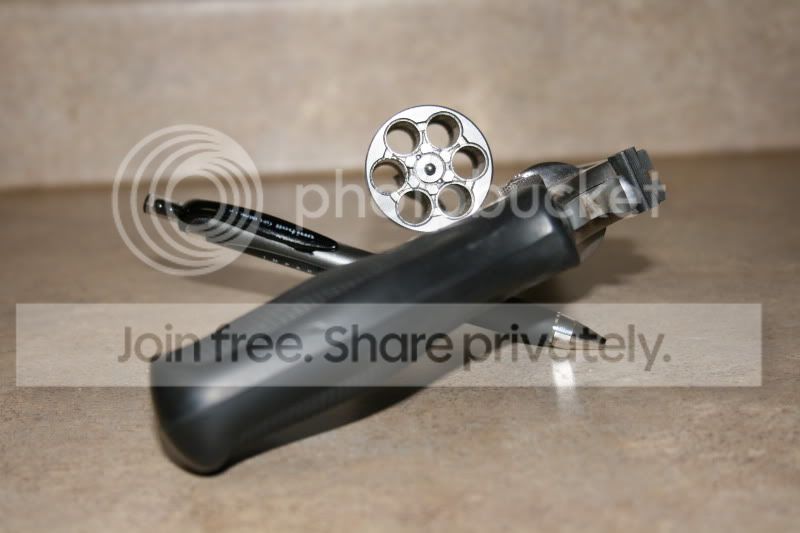
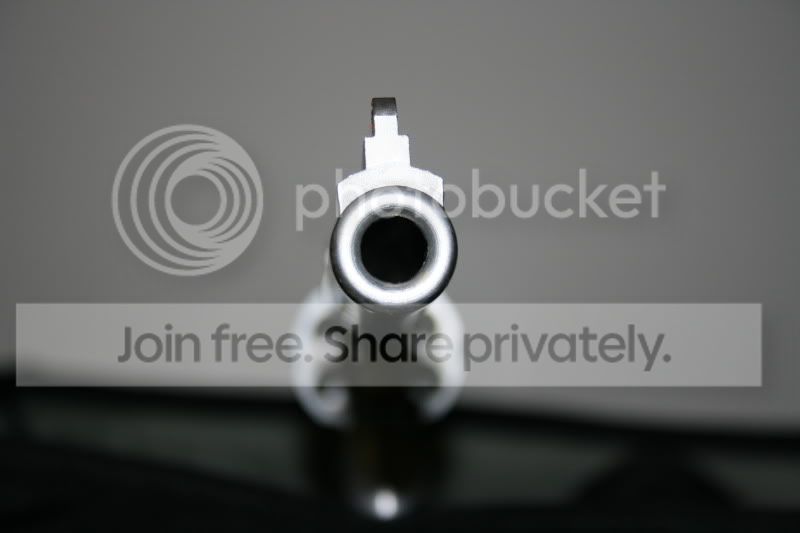
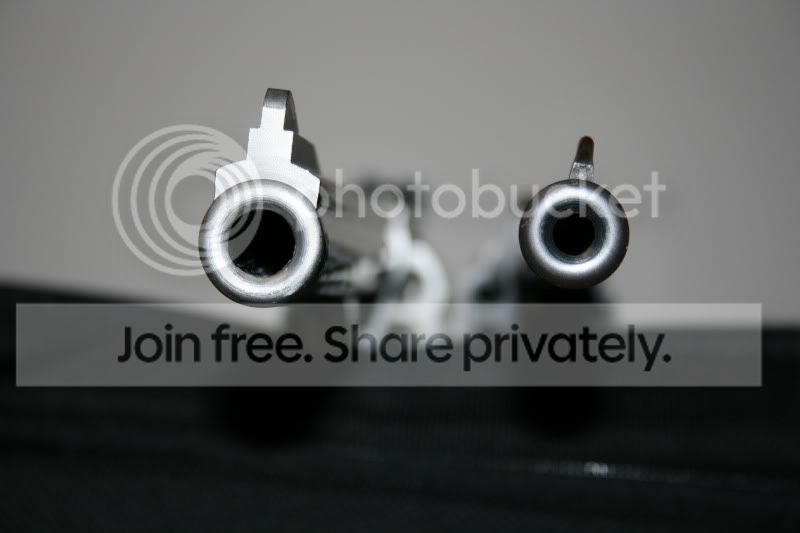
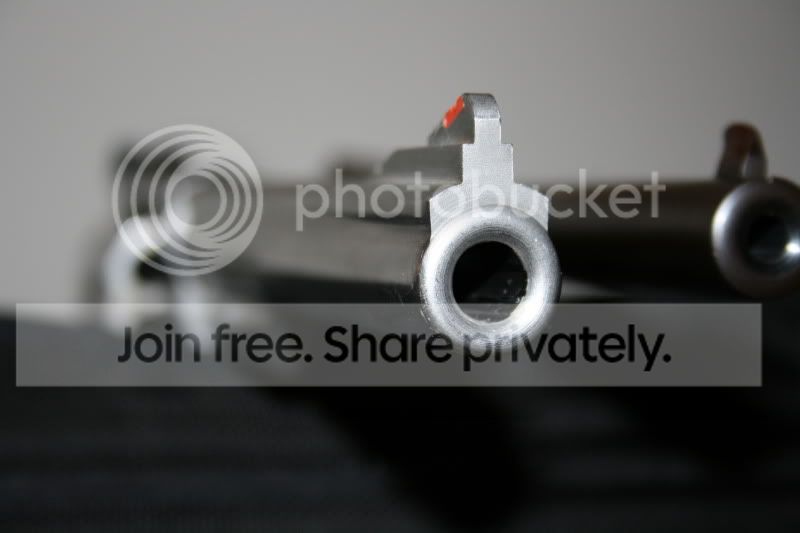
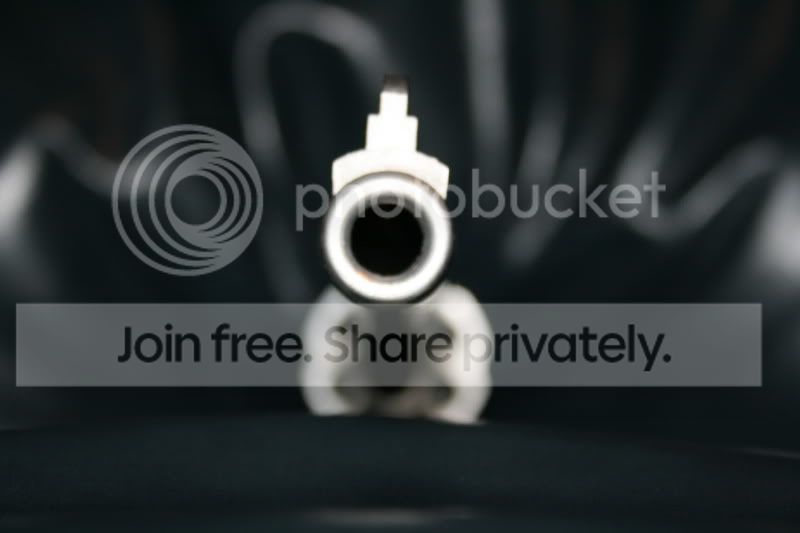
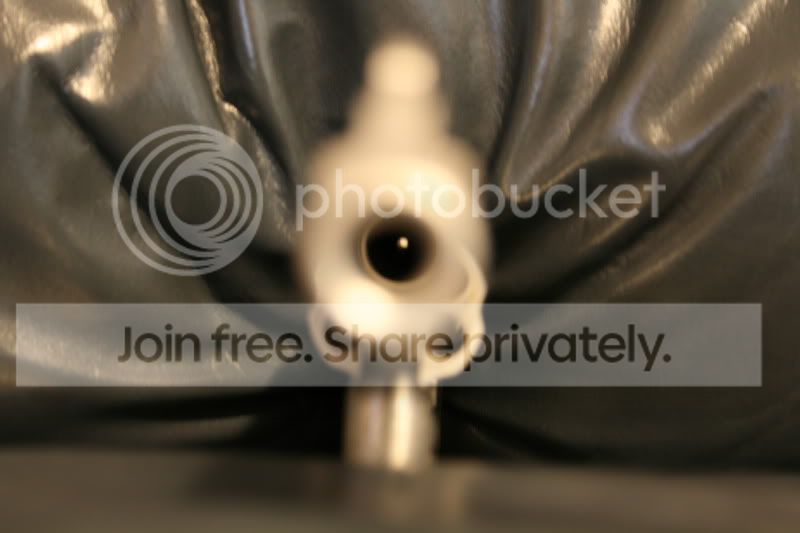
S&W .357 6" Stainless, shown next to my wife's .22
Floyd - I was told you could advise me on ammunition. I'm a gun noob - point me in the right direction for cheap target rounds and some for protection.
Thread Starter
Administrator
Joined: Oct 2002
Posts: 13,943
Likes: 0
From: ɯooɹpǝq ɹnoʎ
Vehicle: ǝdnoɔ sısǝuǝƃ
I'm also interested in a quick rundown of ammunition differences, such as brass jackets vs. copper? round/hollow tip? what's considered a decent price for 357/38 rounds, should I keep it loaded with 357 and use 38 for the range?


Administrator
Joined: Mar 2006
Posts: 12,515
Likes: 2
From: Lacey, WA
Vehicle: Two Accents, Mini, Miata, Van, Outback, and a ZX-6
Nice pistol.
Congratulations on having the single most effective real world man stopping cartridge ever. The 357 has the perfect combination of velocity, caliber, and bullet weight to allow for full expansion without over penetrating with the proper bullets.
For target shooting you should use 38 Special the majority of the time. You should also practice with .357 Magnum practice ammo sometimes just because of the difference in recoil.
I am a firm believer in shooting what you carry for defense purposes also. With a revolver it's not crucial to know that the ammo will feed reliably, but it's good to know if your chosen ammo likes to stick in the cylinder after being fired, etc. which can be important if the spent casings don't fall away allowing you to reload quickly if necessary.
As far as what to shoot goes, the .357 is really pretty great. It's hard to find a hollow point that won't be sufficient. Stick to bullets 150gr or lighter for self defense in the .357. 125gr is probably best. In my opinion your best bet for defense is the Buffalo Bore 19D 125gr jacketed hollowpoint. Other decent options are the Federal 125gr jacketed hollowpoint and the the Remington 125gr Semi-Jacketed hollowpoint. Heavier bullets are okay, but the recoil goes way up, and since the velocity goes down the effectiveness does not improve. Buffalo Bore is in my opinion the best self defense ammo made for most cartridges. For the .357 it is no exception. Their 19C .357 load exceeds the muzzle energy of a typical 30-30 rifle when fired out of a .357 carbine. That is very, very impressive. No matter what you choose make sure it's reliable and shoots accurately. A single .22LR round in between the eyes is far better than six .357 rounds over the left shoulder. Any firearm is only as effective as you are able to be with it and some guns just shoot better with one ammo over another.
Look here for inexpensive 38 Special ammo to practice with. Today it's Pat's Reloading at 24.2 cents per round shipped. It's all the way at the bottom at $199/1000 rounds. Wal-Mart Remington UMC is a close second and you can buy it in a box of 50.
As far as practice ammo goes, anything will work. I suggest that you buy a few boxes and see what shoots the best out of your pistol.
Congratulations on having the single most effective real world man stopping cartridge ever. The 357 has the perfect combination of velocity, caliber, and bullet weight to allow for full expansion without over penetrating with the proper bullets.
For target shooting you should use 38 Special the majority of the time. You should also practice with .357 Magnum practice ammo sometimes just because of the difference in recoil.
I am a firm believer in shooting what you carry for defense purposes also. With a revolver it's not crucial to know that the ammo will feed reliably, but it's good to know if your chosen ammo likes to stick in the cylinder after being fired, etc. which can be important if the spent casings don't fall away allowing you to reload quickly if necessary.
As far as what to shoot goes, the .357 is really pretty great. It's hard to find a hollow point that won't be sufficient. Stick to bullets 150gr or lighter for self defense in the .357. 125gr is probably best. In my opinion your best bet for defense is the Buffalo Bore 19D 125gr jacketed hollowpoint. Other decent options are the Federal 125gr jacketed hollowpoint and the the Remington 125gr Semi-Jacketed hollowpoint. Heavier bullets are okay, but the recoil goes way up, and since the velocity goes down the effectiveness does not improve. Buffalo Bore is in my opinion the best self defense ammo made for most cartridges. For the .357 it is no exception. Their 19C .357 load exceeds the muzzle energy of a typical 30-30 rifle when fired out of a .357 carbine. That is very, very impressive. No matter what you choose make sure it's reliable and shoots accurately. A single .22LR round in between the eyes is far better than six .357 rounds over the left shoulder. Any firearm is only as effective as you are able to be with it and some guns just shoot better with one ammo over another.
Look here for inexpensive 38 Special ammo to practice with. Today it's Pat's Reloading at 24.2 cents per round shipped. It's all the way at the bottom at $199/1000 rounds. Wal-Mart Remington UMC is a close second and you can buy it in a box of 50.
As far as practice ammo goes, anything will work. I suggest that you buy a few boxes and see what shoots the best out of your pistol.
Thread Starter
Administrator
Joined: Oct 2002
Posts: 13,943
Likes: 0
From: ɯooɹpǝq ɹnoʎ
Vehicle: ǝdnoɔ sısǝuǝƃ
sweet... thanks for the insight.
Now, would you mind explaining to me the 19D vs. 19C, and why it matters?
I understand 125gr vs. 150gr, and the importance of practicing with what you carry. I won't be carrying this, but rather keeping it at home for protection there - though the same concept applies. But... why's the different/importance between jackets (and what's semi-jacketed)?
Now, would you mind explaining to me the 19D vs. 19C, and why it matters?
I understand 125gr vs. 150gr, and the importance of practicing with what you carry. I won't be carrying this, but rather keeping it at home for protection there - though the same concept applies. But... why's the different/importance between jackets (and what's semi-jacketed)?
Administrator
Joined: Mar 2006
Posts: 12,515
Likes: 2
From: Lacey, WA
Vehicle: Two Accents, Mini, Miata, Van, Outback, and a ZX-6
Oh, I forgot to mention that the Federal and Remington 125gr JHP cartridges boast the best single-shot stopping power of all cartridges used in law enforcement at a whopping 96% each. The Buffalo Bore is newer and less common but I feel that it will perform even better. If not, a 96% chance of stopping a man with a single shot is phenomenal and no other (even more powerful) pistol can do better.
Note that this doesn't make it more lethal than a larger more powerful pistol cartridge, just more effective at stopping people. Several other factors go into determining lethality and the most lethal bullets are mostly expanding jacketed soft points designed for hunting. JSP's don't stop an assailant as quickly as a hollow point though with a center of mass shot and on a human tend to blast right through only imparting a fraction of the energy into the assailant's body while doing more damage to vital organs through hydrostatic shock. That proves to be more fatal (more damage and a large exit wound) but less effective at making the guy stop at the instant of impact.
<div class='quotetop'>QUOTE(majikTib @ May 3 2009, 01:20 PM) </div><div class='quotemain'>I'm also interested in a quick rundown of ammunition differences, such as brass jackets vs. copper? round/hollow tip? what's considered a decent price for 357/38 rounds, should I keep it loaded with 357 and use 38 for the range?</div>
Jacket material isn't important really, although it's usually copper which is softer and easier on the rifling of your barrel.
Some bullet types include the ones listed on this page.
Other types worth noting are:
JSP
Jacketed Soft Points used in hunting. They expand but not as rapidly as hollow points and they are a more effective design for longer narrower rifle bullets.
AP
Armor piercing. It's a FMJ with a steel core that exits out the front of the bullet upon impact. Not good for self defense.
FNFMJ (Sometimes just WC for wadcutter)
Flat nosed full metal jacket. It's used sometimes in lower powered handguns used for defense that suffer from poor penetration. The flat nose does more damage and travels through flesh straighter than a round nose FMJ bullet.
The only thing you'll want for the .357 for self defense is JHP or SJHP. For practice, LRN, LW, WC, Or FMJ will be fine. Anything jacketed will dirty up your barrel less than a pure lead bullet, FYI. It still needs cleaned after shooting to maintain accuracy and reliability it's just easier with jacketed bullets.
I'm probably forgetting some important ones, but I'm a little on the tired side. Lol.
Note that this doesn't make it more lethal than a larger more powerful pistol cartridge, just more effective at stopping people. Several other factors go into determining lethality and the most lethal bullets are mostly expanding jacketed soft points designed for hunting. JSP's don't stop an assailant as quickly as a hollow point though with a center of mass shot and on a human tend to blast right through only imparting a fraction of the energy into the assailant's body while doing more damage to vital organs through hydrostatic shock. That proves to be more fatal (more damage and a large exit wound) but less effective at making the guy stop at the instant of impact.
<div class='quotetop'>QUOTE(majikTib @ May 3 2009, 01:20 PM) </div><div class='quotemain'>I'm also interested in a quick rundown of ammunition differences, such as brass jackets vs. copper? round/hollow tip? what's considered a decent price for 357/38 rounds, should I keep it loaded with 357 and use 38 for the range?</div>
Jacket material isn't important really, although it's usually copper which is softer and easier on the rifling of your barrel.
Some bullet types include the ones listed on this page.
Other types worth noting are:
JSP
Jacketed Soft Points used in hunting. They expand but not as rapidly as hollow points and they are a more effective design for longer narrower rifle bullets.
AP
Armor piercing. It's a FMJ with a steel core that exits out the front of the bullet upon impact. Not good for self defense.
FNFMJ (Sometimes just WC for wadcutter)
Flat nosed full metal jacket. It's used sometimes in lower powered handguns used for defense that suffer from poor penetration. The flat nose does more damage and travels through flesh straighter than a round nose FMJ bullet.
The only thing you'll want for the .357 for self defense is JHP or SJHP. For practice, LRN, LW, WC, Or FMJ will be fine. Anything jacketed will dirty up your barrel less than a pure lead bullet, FYI. It still needs cleaned after shooting to maintain accuracy and reliability it's just easier with jacketed bullets.
I'm probably forgetting some important ones, but I'm a little on the tired side. Lol.
Administrator
Joined: Mar 2006
Posts: 12,515
Likes: 2
From: Lacey, WA
Vehicle: Two Accents, Mini, Miata, Van, Outback, and a ZX-6
<div class='quotetop'>QUOTE(majikTib @ May 3 2009, 03:57 PM) </div><div class='quotemain'>sweet... thanks for the insight.
Now, would you mind explaining to me the 19D vs. 19C, and why it matters?
I understand 125gr vs. 150gr, and the importance of practicing with what you carry. I won't be carrying this, but rather keeping it at home for protection there - though the same concept applies. But... why's the different/importance between jackets (and what's semi-jacketed)?</div>
No problem.
19D and 19C are Buffal Bore's product numbers. The main difference between their A, B, C, and D ammo is bullet type and weight. 19C is a heavier 158gr JHP. 19D is the 125gr JHP which I think is best for self defense. 19A is a 180gr Hard Cast LFN (Lead Flat Nose) bullet that would probably shoot through several people in one shot it would over penetrate so much. 19B is a 170gr JHC which is a Jacketed Hollow Cavity, Like a JHP but sealed on the front so it looks like a FMJ but isn't full of lead all the way.
Muzzle Energy is determined by the velocity and mass of the bullet.
Jacketing on a bullet determines how it will behave when you hit a target. WC are designed to cut out a nice bold round hole in a paper target so that you can plainly see where you hit. FMJ is designed for maximum penetration through soft tissue. AP is designed for maximum penetration through hard targets. JHP and SJHP are pretty similar, but the non fully jacketed hollow point bullets expand slightly less predictably than a fully jacketed hollow point and SJHP bullets tend to fragment more often. Both are designed to impart all of their energy (or nearly all of it) within a human body instead of blowing out the back side and wasting it's energy in a wall or stump or whatever.
Now, would you mind explaining to me the 19D vs. 19C, and why it matters?
I understand 125gr vs. 150gr, and the importance of practicing with what you carry. I won't be carrying this, but rather keeping it at home for protection there - though the same concept applies. But... why's the different/importance between jackets (and what's semi-jacketed)?</div>
No problem.
19D and 19C are Buffal Bore's product numbers. The main difference between their A, B, C, and D ammo is bullet type and weight. 19C is a heavier 158gr JHP. 19D is the 125gr JHP which I think is best for self defense. 19A is a 180gr Hard Cast LFN (Lead Flat Nose) bullet that would probably shoot through several people in one shot it would over penetrate so much. 19B is a 170gr JHC which is a Jacketed Hollow Cavity, Like a JHP but sealed on the front so it looks like a FMJ but isn't full of lead all the way.
Muzzle Energy is determined by the velocity and mass of the bullet.
Jacketing on a bullet determines how it will behave when you hit a target. WC are designed to cut out a nice bold round hole in a paper target so that you can plainly see where you hit. FMJ is designed for maximum penetration through soft tissue. AP is designed for maximum penetration through hard targets. JHP and SJHP are pretty similar, but the non fully jacketed hollow point bullets expand slightly less predictably than a fully jacketed hollow point and SJHP bullets tend to fragment more often. Both are designed to impart all of their energy (or nearly all of it) within a human body instead of blowing out the back side and wasting it's energy in a wall or stump or whatever.
Administrator
Joined: May 2001
Posts: 23,226
Likes: 9
From: Upstate NY
Vehicle: 2010 Genesis 2.0T
Did you guys see this?
http://www.cnn.com/2009/US/05/04/amm...age/index.html
Ammo shortage! People must be stocking up for when the zombies come out of hiding! *lol*
http://www.cnn.com/2009/US/05/04/amm...age/index.html
Ammo shortage! People must be stocking up for when the zombies come out of hiding! *lol*

