


 This is an area to discuss anything that has to do with Arts & Cultural items, such as Photography, Paintings, History, Movies, Television, Music, Fashion, etc.
So...


Thread Starter
Administrator

Joined: May 2001
Posts: 23,226
Likes: 9
From: Upstate NY
Vehicle: 2010 Genesis 2.0T
 So...
So...
I bought a book on Amazon today thats basically an intro to photography. I have this bad ass SLR camera, with a couple of lenses and an external flash (coming). I also have a petal hood, and UV filter, and so far the only pics I have taken were on Auto mode. I really want to learn how to take cool shots and learn aperture settings and shutter speeds and all that good stuff. I'm gonna have to carry around a cheat sheet because I can never remember what aperture settings to keep it on, so that backgrounds in shots are blurry, but foregrounds are in focus. Same thing with shutter speeds....I can never remember what setting for really fast moving objects, versus slow. *haha*
Anyway, definitely looking forward to learning much more and taking some kick ass shots this summer. OH, and I want to learn all about how to do the HD pics too. laugh.gif
Anyway, definitely looking forward to learning much more and taking some kick ass shots this summer. OH, and I want to learn all about how to do the HD pics too. laugh.gif

Senior Member

Joined: Oct 2008
Posts: 850
Likes: 0
From: Minneapolis, MN
Vehicle: 2002 Accent
Good call with the book. I've never taken a photography class but I took film classes for 4 years a lot about framing shots, leading lines, carries over to photography.
There's a ton of info online regarding photography so I think you'll be able to learn a lot on a budget. I'm jealous man, I just never could bear to fork over the cash for a nice camera (it's so hard to stay on top of the technology curve with shallow pockets haha).
Can't wait to see some awesome pics from you man
There's a ton of info online regarding photography so I think you'll be able to learn a lot on a budget. I'm jealous man, I just never could bear to fork over the cash for a nice camera (it's so hard to stay on top of the technology curve with shallow pockets haha).
Can't wait to see some awesome pics from you man

Administrator
Joined: Mar 2006
Posts: 12,515
Likes: 2
From: Lacey, WA
Vehicle: Two Accents, Mini, Miata, Van, Outback, and a ZX-6
I bought a couple of books myself, and while my camera is not a SLR it does have full manual options so that is nice.
If your camera has a setting to do a series of HDR shots and combine them within the camera use it, but most cameras you have to run them through a program that'll combine the multiple shots with different exposures. Be sure to use a tripod though if you're doing HDR shots, movement between shots makes it more difficult to combine them.
If your camera has a setting to do a series of HDR shots and combine them within the camera use it, but most cameras you have to run them through a program that'll combine the multiple shots with different exposures. Be sure to use a tripod though if you're doing HDR shots, movement between shots makes it more difficult to combine them.

Senior Member
Joined: Apr 2006
Posts: 509
Likes: 0
From: SnoCo, Wa.
Vehicle: 02 accent
<div class='quotetop'>QUOTE (Visionz @ Jan 20 2010, 12:58 PM) <{POST_SNAPBACK}></div><div class='quotemain'>I really want to learn how to take cool shots and learn aperture settings and shutter speeds and all that good stuff. I'm gonna have to carry around a cheat sheet because I can never remember what aperture settings to keep it on, so that backgrounds in shots are blurry, but foregrounds are in focus. Same thing with shutter speeds....I can never remember what setting for really fast moving objects, versus slow. *haha*
Anyway, definitely looking forward to learning much more and taking some kick ass shots this summer. OH, and I want to learn all about how to do the HD pics too. laugh.gif</div>
You really don't need to learn the numbers, in fact there may be a quicker way to learn. Since you have a digi-cam, trial and error is free, and it'll help you get a better "feel" for what's right. Intuition is especially important in candid or sports photography or "natural light" (no flash photography). So just get out there, and start taking pictures of something, checking the picture after each shot, and adjusting one variable at a time, you'll get it.
I know with my camera, it seems to take the best pictures when the "Auto feature" is telling me I'm underexposed by 2/3 of an EV (Exposure Value). My mothers camera does best (in the opinion of our human eyes) when her camera is telling her she's overexposed. Those kinds of things are something you can only learn by spending time taking a bunch of pictures of the same thing with YOUR camera. With digital, you don't spend money on "wasted" shots, so experiment a lot.
I've read that in the photography field, males tend to focus on the gear (and the right tool does help), while gals just want to know how to get the results they want. In the end, technique will serve you better than having the "perfect equipment". I assume that when DJing, it's the same way. Your individual style is expressed by how you use your tools, not as much which tool you use. Whether your car has a 2.0l or a 2.7l engine is less important than if it'll get you where you want to go.
Short version (I hope)
Shutter speed: Knowing the numbers IS NOT important until after you understand the principles, and then they're pretty easy anyways. The faster the shutter speed, the shorter distance your subject will travel, the less blur. Faster objects will require a faster shutter speed, as will brighter lighting conditions. Shutter speeds are given in fractions of a second, so 1/8th of a second is gonna leave the shutter open longer than 1/500th of a second. But faster shutter speeds mean you let in less light. So your pics will be more blown out (overexposed) the longer you leave the lens open. This is a problem when taking pictures of star trails, if the sky around the stars is too bright, the picture will wash out before you see the stars moving.

The solution to this problem of having more light in, is to close your aperture.
Aperture: Again, knowing the numbers are not important until after you get what aperture affects. Aperture is kinda like how wide your shutter opens. The wider it's open, the more light it lets in, and the faster you'll want your shutter to be. The wider opening has a smaller F-number. "Fast Glass" or "prime" lenses can open the aperture wider, so prime lenses have smaller F numbers at the minimal small end of the F-stop range.

This particular lens can only open the aperature to maximum width (smallest number) of 3.5. A wider opening allows you to use faster shutter speeds to catch the sweat dripping off the quarterbacks face or to stop the wings on a hummingbird. It also allows you to take pictures in lower light situations.

F-stop: A F-stop number is a measure of how wide open the aperture is. The number is the bottom number from a fraction. An F-stop of 2 means the aperture is open 1/2 as wide as an aperature of 1. And an F-stop of 4 would be 1/4 as wide as an aperture of 1, or half as wide as an aperture of an F-stop of 2. So why the "in between numbers"? Due to the formula for calculating area, a circle-ish aperture open 1/2 as wide only let's 1/4 of the light in. So an aperture of f4(1/4) lets in a quarter of the light as an aperture of f2(1/2), which lets in a quarter of the light as an aperture of f1(1/1). The "in between numbers" are half steps (if you will). f4 lets in half the light of f2.8, which lets in half the light of f2, which lets in half the light of f1.4, which lets in half the light of f1.
Depth of Field: Remember that blurry backgroun, focused foreground you were talking about? That's depth of field. Ok, I really don't want to explain the math of how light comes into the lens at different angles and that determines how much Depth of your picture is is focus. So I'm just gonna give you some rules of thumb.


<ul>[*]Your sharpest picture will always be 1/3 of the way between your closest focused point and your farthest focused point.[*]DoF is affected by Aperture, disance to the subject, and focal length.[*]A wider aperture (smaller fnumber or bigger fraction of "all the way open") has a shallower (smaller in distance from near to far) depth of field. Want blurry backgrounds? Go with a shallower DoF, which means a wider aperture, which means a small fnumber. (See, you're getting this.)[/list]f32 (tiny hole, small aperture)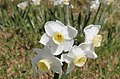
f5 (bigger hole, larger/wider aperture)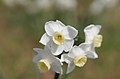
ISO level: basically, this is your cameras sensitivity to light. Higher ISO means more sensitive, but it also means your picture will get more "noise". So say, it's really dimly lit in your house, and you can't afford a prime lens (the aperture doesn't open very wide) the two things you could do to lighten up your image is to increase the amount of time the shutter is open OR increase the ISO. If you really want to get picky, it's almost always better to leave the ISO at lower numbers if you can help it, but there are times to crank it up. Maybe in your dimly lit house, with your economical lens, you WOULD choose to slow the shutter, BUT your Great Great-Aunt Zelda is taking the picture, and she can't hold the camera still to save her life. If you can't find a tripod, and you can't open the aperture, and all the candles in the room are lit, then raising the ISO can help.
So basically, when you see something you want to take a picture of:
<ul>[*]Decide what you want in or out of the picture. This can be altered by angle of the camera, how tight you crop the shot, how shallow your DoF is, etc.[*]Measure the light. The cameras auto feature will give you an estimate of shutter speed and aperture size.[*]Setup the shot. (more light means wider aperture or slower shutter or higher ISO)[/list]And leaving your camera on Auto will do the last two, but you have less control of things like DoF PLUS your cameras Auto Exposure might be too bright (like my camera) or too dark (like my moms camera).
HDR: Ok, my brain is slowing down so here is my tired attempt at HDR. HDR (High Dynamic Resolution) uses multiple pictures of the same subject. Usually, the aperture is unchanged (otherwise it would affect your Dof) and the shutter is used at different speeds: Fast, Just Right, and Slow. (Some HDR photos use alot more than 3 images, in a range of exposures.)
Side note:This practice of taking 3 pictures at various exposures is called bracketing. Alot of newer cameras have a bracketing option. Using bracketing in Auto mode can help compensate for a camera that imperfectly meters light, or in Manual mode can help compensate for a photographer who estimates light levels imperfectly. cool.gif
Then software (maybe in your camera if it has that option, or on your computer,) takes the shadows from your least exposed picture (fastest shutter speed) and combines it with the midtones from your correctly exposed picture and the highlights from your most exposed picture (slowest shutter). Yuor darkest darks+normal middles+brightest brights. That's it; that's HDR. Because you're taking 3 (or more) seperate pictures, you don't want to adjust the aperture, focus, zoom, or position of the camera in between. That's why you pretty much need a tripod and a timed or remote shutter release. Pretty much every camera has a timer so you're probably good to go there.
If you wanna learn more about the numbers of photography exposure (maybe your a numbers guy) look up things like the sunny 16 rule or f-stop math.
If you wanna learn more about indirect or off-camera flash look up things relating to strobist photography or off axis lighting. That'll be things like:

(rear curtain flash-meaning the flash fires after the shutter is open but right before it closes)
or

(lighting from a different direction than the camera lens)
or

(colored light screens or reflectors)
Anyway, definitely looking forward to learning much more and taking some kick ass shots this summer. OH, and I want to learn all about how to do the HD pics too. laugh.gif</div>
You really don't need to learn the numbers, in fact there may be a quicker way to learn. Since you have a digi-cam, trial and error is free, and it'll help you get a better "feel" for what's right. Intuition is especially important in candid or sports photography or "natural light" (no flash photography). So just get out there, and start taking pictures of something, checking the picture after each shot, and adjusting one variable at a time, you'll get it.
I know with my camera, it seems to take the best pictures when the "Auto feature" is telling me I'm underexposed by 2/3 of an EV (Exposure Value). My mothers camera does best (in the opinion of our human eyes) when her camera is telling her she's overexposed. Those kinds of things are something you can only learn by spending time taking a bunch of pictures of the same thing with YOUR camera. With digital, you don't spend money on "wasted" shots, so experiment a lot.
I've read that in the photography field, males tend to focus on the gear (and the right tool does help), while gals just want to know how to get the results they want. In the end, technique will serve you better than having the "perfect equipment". I assume that when DJing, it's the same way. Your individual style is expressed by how you use your tools, not as much which tool you use. Whether your car has a 2.0l or a 2.7l engine is less important than if it'll get you where you want to go.
Short version (I hope)
Shutter speed: Knowing the numbers IS NOT important until after you understand the principles, and then they're pretty easy anyways. The faster the shutter speed, the shorter distance your subject will travel, the less blur. Faster objects will require a faster shutter speed, as will brighter lighting conditions. Shutter speeds are given in fractions of a second, so 1/8th of a second is gonna leave the shutter open longer than 1/500th of a second. But faster shutter speeds mean you let in less light. So your pics will be more blown out (overexposed) the longer you leave the lens open. This is a problem when taking pictures of star trails, if the sky around the stars is too bright, the picture will wash out before you see the stars moving.
The solution to this problem of having more light in, is to close your aperture.
Aperture: Again, knowing the numbers are not important until after you get what aperture affects. Aperture is kinda like how wide your shutter opens. The wider it's open, the more light it lets in, and the faster you'll want your shutter to be. The wider opening has a smaller F-number. "Fast Glass" or "prime" lenses can open the aperture wider, so prime lenses have smaller F numbers at the minimal small end of the F-stop range.
This particular lens can only open the aperature to maximum width (smallest number) of 3.5. A wider opening allows you to use faster shutter speeds to catch the sweat dripping off the quarterbacks face or to stop the wings on a hummingbird. It also allows you to take pictures in lower light situations.
F-stop: A F-stop number is a measure of how wide open the aperture is. The number is the bottom number from a fraction. An F-stop of 2 means the aperture is open 1/2 as wide as an aperature of 1. And an F-stop of 4 would be 1/4 as wide as an aperture of 1, or half as wide as an aperture of an F-stop of 2. So why the "in between numbers"? Due to the formula for calculating area, a circle-ish aperture open 1/2 as wide only let's 1/4 of the light in. So an aperture of f4(1/4) lets in a quarter of the light as an aperture of f2(1/2), which lets in a quarter of the light as an aperture of f1(1/1). The "in between numbers" are half steps (if you will). f4 lets in half the light of f2.8, which lets in half the light of f2, which lets in half the light of f1.4, which lets in half the light of f1.
Depth of Field: Remember that blurry backgroun, focused foreground you were talking about? That's depth of field. Ok, I really don't want to explain the math of how light comes into the lens at different angles and that determines how much Depth of your picture is is focus. So I'm just gonna give you some rules of thumb.
<ul>[*]Your sharpest picture will always be 1/3 of the way between your closest focused point and your farthest focused point.[*]DoF is affected by Aperture, disance to the subject, and focal length.[*]A wider aperture (smaller fnumber or bigger fraction of "all the way open") has a shallower (smaller in distance from near to far) depth of field. Want blurry backgrounds? Go with a shallower DoF, which means a wider aperture, which means a small fnumber. (See, you're getting this.)[/list]f32 (tiny hole, small aperture)
f5 (bigger hole, larger/wider aperture)
ISO level: basically, this is your cameras sensitivity to light. Higher ISO means more sensitive, but it also means your picture will get more "noise". So say, it's really dimly lit in your house, and you can't afford a prime lens (the aperture doesn't open very wide) the two things you could do to lighten up your image is to increase the amount of time the shutter is open OR increase the ISO. If you really want to get picky, it's almost always better to leave the ISO at lower numbers if you can help it, but there are times to crank it up. Maybe in your dimly lit house, with your economical lens, you WOULD choose to slow the shutter, BUT your Great Great-Aunt Zelda is taking the picture, and she can't hold the camera still to save her life. If you can't find a tripod, and you can't open the aperture, and all the candles in the room are lit, then raising the ISO can help.
So basically, when you see something you want to take a picture of:
<ul>[*]Decide what you want in or out of the picture. This can be altered by angle of the camera, how tight you crop the shot, how shallow your DoF is, etc.[*]Measure the light. The cameras auto feature will give you an estimate of shutter speed and aperture size.[*]Setup the shot. (more light means wider aperture or slower shutter or higher ISO)[/list]And leaving your camera on Auto will do the last two, but you have less control of things like DoF PLUS your cameras Auto Exposure might be too bright (like my camera) or too dark (like my moms camera).
HDR: Ok, my brain is slowing down so here is my tired attempt at HDR. HDR (High Dynamic Resolution) uses multiple pictures of the same subject. Usually, the aperture is unchanged (otherwise it would affect your Dof) and the shutter is used at different speeds: Fast, Just Right, and Slow. (Some HDR photos use alot more than 3 images, in a range of exposures.)
Side note:This practice of taking 3 pictures at various exposures is called bracketing. Alot of newer cameras have a bracketing option. Using bracketing in Auto mode can help compensate for a camera that imperfectly meters light, or in Manual mode can help compensate for a photographer who estimates light levels imperfectly. cool.gif
Then software (maybe in your camera if it has that option, or on your computer,) takes the shadows from your least exposed picture (fastest shutter speed) and combines it with the midtones from your correctly exposed picture and the highlights from your most exposed picture (slowest shutter). Yuor darkest darks+normal middles+brightest brights. That's it; that's HDR. Because you're taking 3 (or more) seperate pictures, you don't want to adjust the aperture, focus, zoom, or position of the camera in between. That's why you pretty much need a tripod and a timed or remote shutter release. Pretty much every camera has a timer so you're probably good to go there.
If you wanna learn more about the numbers of photography exposure (maybe your a numbers guy) look up things like the sunny 16 rule or f-stop math.
If you wanna learn more about indirect or off-camera flash look up things relating to strobist photography or off axis lighting. That'll be things like:
(rear curtain flash-meaning the flash fires after the shutter is open but right before it closes)
or
(lighting from a different direction than the camera lens)
or
(colored light screens or reflectors)