


What's this for?


Thread Starter
Senior Member

Joined: Dec 2008
Posts: 3,837
Likes: 0
From: Floating around the AUDM
Vehicle: X3 Sprint, S-Coupe Turbo
 What's this for?
All the new cars that I've seen around have wheel arches with a flattened edge to em, does anyone know what this is actually for?


My best guess is that it's for aero purposes, so the spinning wheels don't interfere with the airflow down the side of the car too much. But I'm just guessing. Thoughts?
My best guess is that it's for aero purposes, so the spinning wheels don't interfere with the airflow down the side of the car too much. But I'm just guessing. Thoughts?





Senior Member
Joined: Mar 2008
Posts: 4,185
Likes: 0
From: Atlanta, GA
Vehicle: MC + RD2 + AW11 + 944 = 4x Win
My closest guess relates to the design process. When I was learning to design cars in CAD/3D programs You always began with the wheels and drivetrain, basically pic and existing platform and move from there. Once the wheels and tires are in place you'd move on to design the fenders starting with the wheels arches, which are much easier to shape is using a flat 90 degree plane.
If I had to guess, I think it might just be a design aesthetic left over from the early days of 3D implementation.
It might have some aerodynamic properties being that both Bugatti and Ferrari rely on this design, but Lamborghini and SSC don't so not sure how much merit to give that.
If you're referring to concave vs. convex design, the concave creates a wind tunnel to channel air around the car reducing drag and increasing stability. On some supercars the concavity will also be use to channel air into ducts all over the car. Convex fenders generally shape the air over the car with less of directional action but inversely increases downward forces on the top side of the car. This is especially effective if a diffuse is in use under the car, but either use will increase the coefficient of drag by large amounts.
Not that any of the above as much to do on any basic commuter vehicle.
If I had to guess, I think it might just be a design aesthetic left over from the early days of 3D implementation.
It might have some aerodynamic properties being that both Bugatti and Ferrari rely on this design, but Lamborghini and SSC don't so not sure how much merit to give that.
I'm wondering about that crease/flat area around the wheel, I hope this pic shows what I mean.
http://i456.photobucket.com/albums/q...steel/arch.png
http://i456.photobucket.com/albums/q...steel/arch.png
Not that any of the above as much to do on any basic commuter vehicle.

Administrator

Joined: Oct 2002
Posts: 13,943
Likes: 0
From: ɯooɹpǝq ɹnoʎ
Vehicle: ǝdnoɔ sısǝuǝƃ
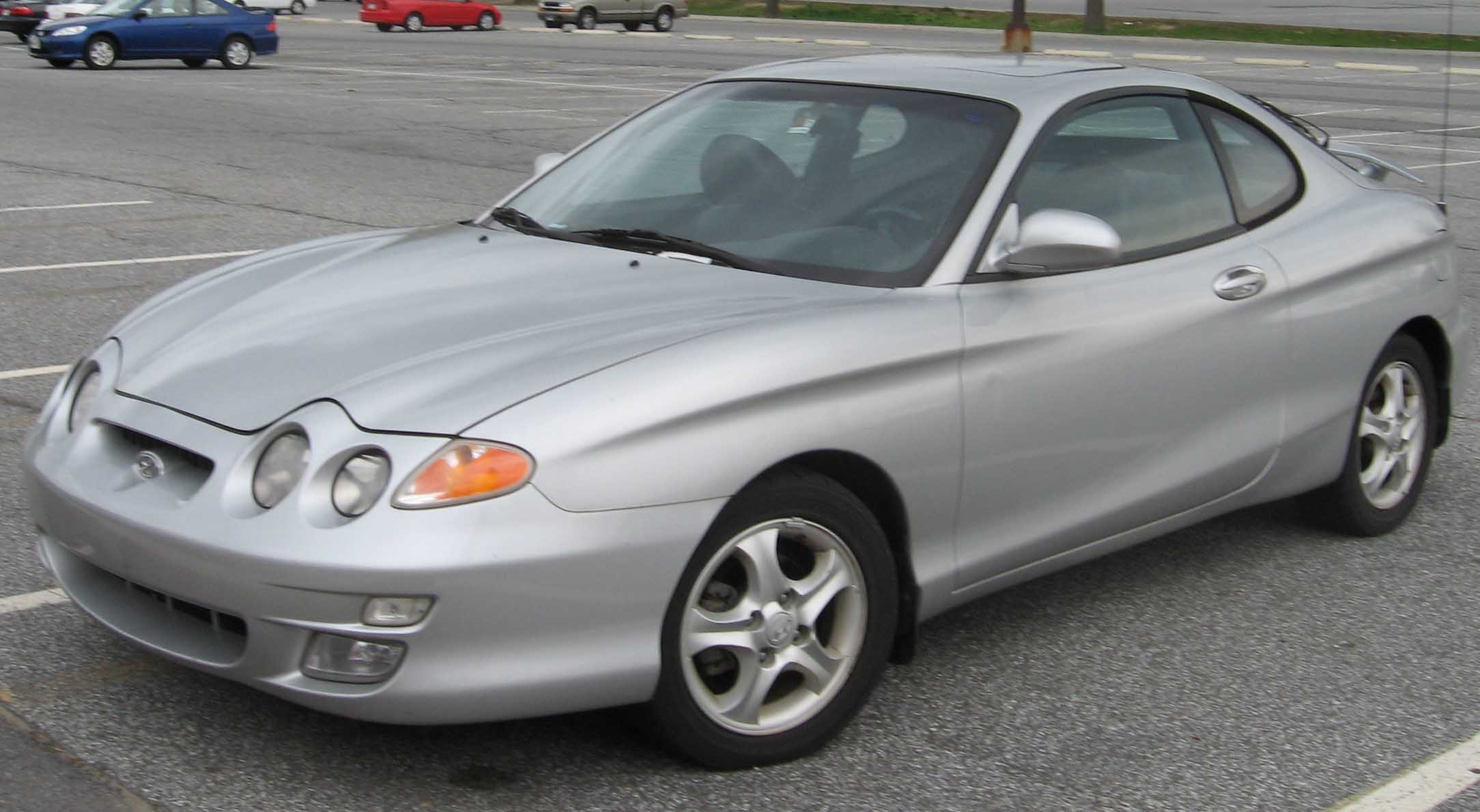
Do you think it can be linked to the rise in popularity to wider/flared fenders? Maybe it's a better way to roll the fender into the body lines of the car so the vehicle doesn't look completely flat. The 2000 Tiburon was flat, the GK was slightly rolled, and the Genesis has the flare that you're referring to.


Senior Member
Joined: Apr 2011
Posts: 835
Likes: 0
From: Churubusco, IN
Vehicle: 84 VW Rabbit, 01 Audi A8L, 08 VW GTI
Wheel i too have been wondering this very question. With every generation the flat spot where the fender meets the wheel is getting bigger. I'm not sure why new cars have this common feature, but i would like to know.



Senior Member
Joined: Aug 2009
Posts: 11,992
Likes: 0
From: Washington D.C.
Vehicle: Hyundai Tiburon FX
I've always wondered this as well!!!!! Even today.
Strangely, the F2 Kitcar had them too and that is from 1998. It was designed by McLaren F1 designer Peter Stevens and the McLaren doesn't even have these but you weigh in that it was designed 4 years prior.

ALL modern WRC cars have these and they appear identical to the Hyundai F2.

My thoughts too now that tire/rim sizes are larger and modification has become a culture. But why not just curve them?
Personally I loved cars without them.
Strangely, the F2 Kitcar had them too and that is from 1998. It was designed by McLaren F1 designer Peter Stevens and the McLaren doesn't even have these but you weigh in that it was designed 4 years prior.
ALL modern WRC cars have these and they appear identical to the Hyundai F2.
Do you think it can be linked to the rise in popularity to wider/flared fenders? Maybe it's a better way to roll the fender into the body lines of the car so the vehicle doesn't look completely flat. The 2000 Tiburon was flat, the GK was slightly rolled, and the Genesis has the flare that you're referring to.
My thoughts too now that tire/rim sizes are larger and modification has become a culture. But why not just curve them?
Personally I loved cars without them.